A) The concentration of Na+ ions will rise.
B) The pH of the beaker's contents will increase.
C) The pH of the beaker's contents will be neutral.
D) The pH of the beaker's contents will decrease.
F) C) and D)
Correct Answer

verified
Correct Answer
verified
A) 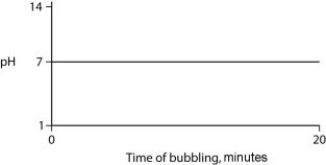
B) 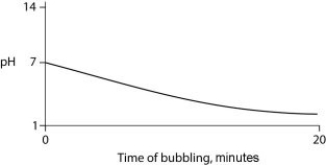
C) 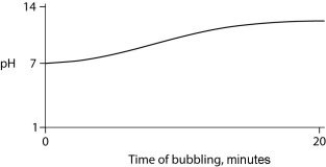
D) 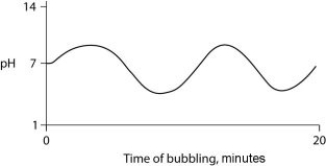
F) B) and D)
Correct Answer
verified
Correct Answer
verified
A) 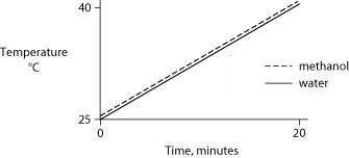
B) 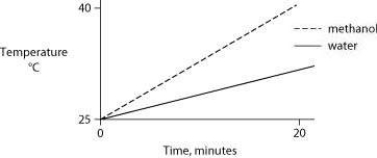
C) 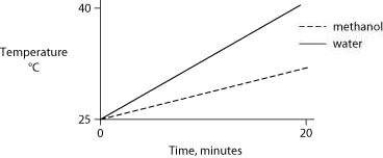
D) 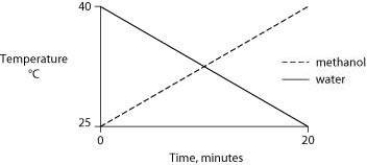
F) A) and B)
Correct Answer
verified
Correct Answer
verified
A) acidic: H⁺ acceptor
B) basic: H⁺ acceptor
C) acidic: H⁺ donor
D) neutral
F) B) and C)
Correct Answer
verified
Correct Answer
verified
A) Lakes cannot freeze solid in winter, despite low temperatures.
B) A raft spider can walk across the surface of a small pond.
C) Organisms can resist temperature changes, although they give off heat due to chemical reactions.
D) Sweat can evaporate from the skin, helping to keep people from overheating.
F) A) and D)
Correct Answer
verified
Correct Answer
verified
A) increase when temperature increases
B) increase when pH increases
C) are a result of hydrogen bonding
D) are a result of polar covalent bonding
F) A) and C)
Correct Answer
verified
Correct Answer
verified
A) pH
B) density at room temperature
C) heat of vaporization
D) specific heat
F) B) and C)
Correct Answer
verified
Correct Answer
verified
A) increase dissolved carbonate concentrations and promote faster growth of corals and shell-building animals
B) decrease dissolved carbonate concentrations and promote faster growth of corals and shell-building animals
C) increase dissolved carbonate concentrations and hinder growth of corals and shell-building animals
D) decrease dissolved carbonate concentrations and hinder growth of corals and shell-building animals
F) All of the above
Correct Answer
verified
Correct Answer
verified
A) The rate of transpiration will be the same for both water and the nonpolar substance.
B) The rate of transpiration will be slightly lower with the nonpolar substance as the plant will not have evolved with the nonpolar compound.
C) Transpiration rates will fall to zero as nonpolar compounds do not have the properties necessary for adhesion and cohesion.
D) Transpiration rates will increase as nonpolar compounds undergo adhesion and cohesion with wood fibers more readily than water.
F) A) and D)
Correct Answer
verified
Correct Answer
verified
A) compounds that have polar covalent bonds
B) oils
C) oxygen gas (O₂) molecules
D) chloride ions
F) A) and B)
Correct Answer
verified
Correct Answer
verified
A) Oil and water do not mix well.
B) A lake heats up more slowly than the air around it.
C) Ice floats on water.
D) Sugar dissolves in hot tea faster than in iced tea.
F) A) and B)
Correct Answer
verified
Correct Answer
verified
A) 1 liter of 0.5 M NaCl
B) 1 liter of 1.0 M NaCl
C) 1 liter of 1.0 M glucose
D) 1 liter of 1.0 M NaCl and 1 liter of 1.0 M glucose will contain equal numbers of solute particles.
F) A) and B)
Correct Answer
verified
Correct Answer
verified
A) Burns caused by liquids are always milder.
B) Steam can penetrate into the skin.
C) Steam contains more energy than water.
D) Water evaporates and leaves the surface faster and helps in cooling.
F) All of the above
Correct Answer
verified
Correct Answer
verified
A) 1 g of glucose, and then add more water until the total volume of the solution is 1 L
B) 18 g of glucose, and then add more water until the total volume of the solution is 1 L
C) 180 g of glucose, and then add 0.2 L more of water
D) 180 g of glucose, and then add more water until the total volume of the solution is 1 L
F) None of the above
Correct Answer
verified
Correct Answer
verified
A) a covalent bond
B) a hydrogen bond
C) an ionic bond
D) a van der Waals interaction
F) A) and C)
Correct Answer
verified
Correct Answer
verified
Showing 41 - 55 of 55
Related Exams