A) vesicles
B) breccia
C) porphyritic
D) glassy
E) none of these
G) A) and B)
Correct Answer

verified
Correct Answer
verified
A) A
B) B
C) C
D) all of the locations shown
E) locations A and B only
G) A) and C)
Correct Answer
verified
Correct Answer
verified
A) entirely at the surface
B) for a while at some depth and then rose to the surface where it finished solidifying
C) slowly under relatively deep conditions
D) slowly and underwater
F) A) and C)
Correct Answer
verified
Correct Answer
verified
A) partial melting
B) complete melting
C) temporary melting
D) subductive melting
F) A) and D)
Correct Answer
verified
Correct Answer
verified
A) 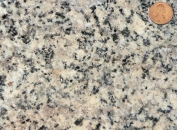
B) 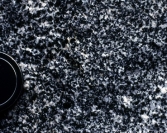
C) 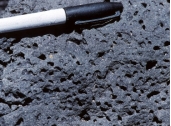
D) 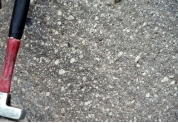
F) B) and D)
Correct Answer
verified
Correct Answer
verified
A) subduction beneath western North America
B) water that caused partial melting of hot mantle
C) partial melting of continental crust
D) solidification of magma below the surface
E) recent normal faulting along the east side of the batholith
G) A) and C)
Correct Answer
verified
Correct Answer
verified
A) tuff
B) pumice
C) scoria
D) diorite
E) vesicular basalt
G) A) and B)
Correct Answer
verified
Correct Answer
verified
A) erosion of the volcano, leaving behind the solidified conduit inside the volcano
B) erosion of overlying rock layers exposing the conduit below the volcano
C) both of these
E) All of the above
Correct Answer
verified
Correct Answer
verified
A) water within a pan is heated and flows in a circular path
B) seawater is drawn into a mid-ocean ridge, heated, and rises
C) the rise of material beneath mid-ocean ridges coupled with subduction
D) all of these
F) C) and D)
Correct Answer
verified
Correct Answer
verified
A) source area
B) magma chamber
C) intrusive area
D) extrusive area
F) None of the above
Correct Answer
verified
Correct Answer
verified
A) when hot but solid igneous rock contracts
B) when hot liquid igneous rock contracts
C) when hot but solid igneous rock expands
D) when hot liquid igneous rock expands
F) A) and C)
Correct Answer
verified
Correct Answer
verified
A) conduction to surrounding solid rocks
B) loss of thermal energy to the air and water
C) water that is heated and circulated near the magma
D) an increase in the rate of radioactive decay
F) None of the above
Correct Answer
verified
Correct Answer
verified
A) Crystals that form may sink or rise in the chamber.
B) A partially crystallized magma could be heated by a new, hotter magma entering the chamber.
C) Magma may partially melt the chamber's rock walls, forming a new magma composition.
D) All of these
F) A) and D)
Correct Answer
verified
Correct Answer
verified
A) Granite
B) Ryholite
C) Basalt
D) Gabbro
E) Andesite
G) All of the above
Correct Answer
verified
Correct Answer
verified
A) beneath a volcano
B) above a volcano
C) with a volcano
E) None of the above
Correct Answer
verified
Correct Answer
verified
A) A and B
B) A, B, and C
C) B, C, and D
D) C, D, and E
E) D and E
G) A) and B)
Correct Answer
verified
Correct Answer
verified
A) Sinking or floating crystals may change the composition of the remaining magma.
B) Wall rocks can melt and become incorporated into the magma.
C) If two magmas mix, the resulting magma would be between the compositions of the two magmas.
D) All of these.
F) C) and D)
Correct Answer
verified
Correct Answer
verified
A) finely crystalline rocks that formed in dikes
B) gabbro that solidified in a magma chamber
C) pillow basalt
D) andesite and granodiorite
F) B) and C)
Correct Answer
verified
Correct Answer
verified
A) It formed from an explosive pyroclastic eruption.
B) The rock solidified at great depth.
C) The magma formed some crystals before rising closer to the surface and solidifying.
D) The magma had abundant dissolved gas.
F) All of the above
Correct Answer
verified
Correct Answer
verified
A) Igneous rock
B) Metamorphic rock
C) Sedimentary rock
E) None of the above
Correct Answer
verified
Correct Answer
verified
Showing 81 - 100 of 147
Related Exams